
English
Views: 0 Author: Site Editor Publish Time: 2026-02-24 Origin: Site


Bench press is one of the most recognized strength-training movements in the fitness world. Whether you train at a commercial gym, a corporate fitness center, or a home studio, the bench press is often considered a foundation exercise for upper-body development. But what does bench press actually do to your body—and why is a dumbbell bench increasingly preferred over fixed barbell setups?
From muscle growth and strength gains to joint stability and functional movement, bench pressing delivers far more benefits than many people realize. And when performed on a well-designed dumbbell bench, those benefits become more balanced, safer, and more adaptable across different users and training goals.
At www.zy-fitness.com, we work closely with gyms, distributors, and training facilities that demand versatile, durable, and ergonomic strength equipment. In this article, we explain what bench press does to you physically, how a dumbbell bench enhances training outcomes, and why it has become a core piece of equipment in modern fitness environments.
The bench press is a compound movement, meaning it activates multiple muscle groups at the same time. While it is often associated with chest training, its impact extends well beyond the pectorals.
Pectoralis major – the main chest muscle responsible for pushing movements
Anterior deltoids – front shoulder muscles assisting pressing motion
Triceps brachii – responsible for elbow extension and lockout strength
Upper back and scapular stabilizers
Core muscles for posture and balance
Forearms and grip muscles, especially with dumbbells
Using a dumbbell bench increases the involvement of stabilizing muscles because each arm works independently. This leads to more balanced muscle development and improved neuromuscular coordination compared to barbell bench pressing.
Consistent bench press training produces both visible physical changes and long-term functional improvements. While many people associate the bench press primarily with chest size, its real value lies in how it reshapes strength patterns, movement quality, and joint resilience over time—especially when performed using a dumbbell bench.
Bench press significantly improves upper-body pushing strength, which transfers directly to real-world movement and performance. Stronger pressing mechanics support:
Daily lifting tasks such as carrying, pushing, and overhead handling
Athletic performance in sports that involve upper-body force generation
Occupational physical demands in labor-intensive or repetitive work environments
When training on a dumbbell bench, strength gains are often more symmetrical and balanced. Each arm must generate force independently, which helps correct dominant-side compensation that commonly occurs with barbell bench pressing. Over time, this reduces left–right strength discrepancies and leads to more stable, controlled force output.
Progressive overload on a bench is one of the most effective ways to stimulate muscle growth in the upper body. Regular bench press training promotes:
Increased chest thickness and definition
Greater triceps mass and arm strength
Improved shoulder development and stability
Dumbbells play a critical role in hypertrophy because they allow a greater range of motion than a fixed barbell. This extended movement path increases muscle fiber recruitment and time under tension—two key drivers of muscle growth. By allowing the arms to move freely, dumbbell bench training places more stress on stabilizing muscles, creating a deeper and more complete stimulus.
A fixed bar path can place unnecessary stress on the shoulders, wrists, and elbows—especially for users with limited mobility or previous injuries. Dumbbells allow natural movement patterns that align better with individual joint mechanics.
By reducing forced positioning and allowing subtle adjustments in wrist and shoulder angles, dumbbell bench training helps minimize joint strain. Over time, this supports healthier shoulders, improved scapular control, and long-term training sustainability.
While traditional flat benches remain common, dumbbell benches provide superior adaptability for modern strength training environments.
With dumbbells, each arm must stabilize and generate force independently. This improves:
Muscle balance between left and right sides
Neuromuscular coordination
Core engagement and postural control
This independence not only improves strength symmetry but also enhances overall movement quality, which is especially important for athletes and functional training programs.
Modern dumbbell benches support multiple pressing variations, including:
Flat press for overall chest development
Incline press to emphasize the upper chest and shoulders
Decline press to target the lower chest
This adjustability allows users to target different muscle regions without changing equipment. From a facility management perspective, this versatility increases training options while minimizing equipment footprint.
For beginners, older adults, or rehabilitation-focused users, dumbbell benches offer a safer training environment. Loads can be adjusted gradually, and exercises can be stopped easily without the risks associated with failed barbell lifts.
This makes dumbbell benches suitable for:
Entry-level strength programs
Corrective or rehabilitation training
Long-term joint-friendly fitness routines
Bench press training is not just about aesthetics or raw strength. When integrated properly, it contributes to overall functional performance.
Benefit | Practical Impact |
Improved pushing mechanics | Better performance in sports and work-related tasks |
Core stabilization | Enhanced posture and spinal control |
Shoulder mobility | Healthier joint movement patterns |
Mental resilience | Builds confidence, focus, and discipline |
A dumbbell bench supports functional strength by encouraging natural joint alignment and controlled resistance progression. This leads to improved movement efficiency both inside and outside the gym.
From commercial gyms to hotel fitness rooms and corporate wellness centers, dumbbell benches have become a standard piece of equipment.
One adjustable dumbbell bench can replace multiple fixed machines. This makes it an ideal solution for facilities that need to maximize training variety within limited floor space.
Adjustable dumbbell benches accommodate:
Different body sizes and heights
Multiple fitness levels, from beginner to advanced
Diverse training programs, including strength, rehabilitation, and functional training
This flexibility allows gyms to serve a broader user base with fewer pieces of equipment.
Compared to complex selectorized machines, dumbbell benches offer:
Fewer mechanical parts
Easier upkeep and cleaning
Longer service life under heavy use
At ZY Fitness, our dumbbell benches are engineered specifically for high-traffic environments. We focus on structural stability, reinforced frames, and ergonomic padding to ensure long-term durability and user comfort, even under continuous daily use.
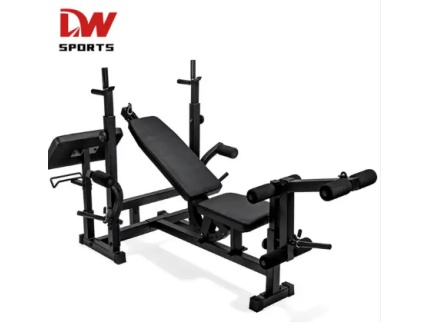
When selecting a dumbbell bench for professional or commercial use, build quality and functional design should always take priority over appearance alone. A high-quality dumbbell bench directly influences user safety, training efficiency, and long-term equipment return on investment.
Key structural and functional features include:
Feature | Why It Matters |
Heavy-duty steel frame | Provides high load capacity, structural stability, and user safety under heavy lifting |
Multiple angle adjustments | Supports flat, incline, and decline training for greater exercise variety |
Non-slip padding | Enhances stability during pressing movements and reduces injury risk |
Transport wheels | Allows easy repositioning in busy gym environments |
Commercial-grade upholstery | Improves durability, hygiene, and resistance to sweat and wear |
A well-engineered dumbbell bench maintains its structural integrity under repeated high loads and frequent adjustments. Poorly built benches may wobble, wear unevenly, or lose adjustment accuracy over time—negatively impacting user confidence and safety.
Dumbbell bench training is highly adaptable, making it suitable for a wide range of users:
Beginners learning correct pressing mechanics and movement control
Athletes developing balanced upper-body power and joint stability
Bodybuilders targeting chest symmetry and muscle definition
Rehabilitation clients requiring joint-friendly, controlled resistance
Commercial gyms serving diverse populations with varying fitness levels
This broad applicability makes dumbbell benches a strategic investment for fitness facilities aiming to maximize usability with minimal equipment footprint.
At ZY Fitness, we design dumbbell benches based on real-world training demands rather than theoretical specifications alone. Our development focus extends beyond raw strength capacity to include:
Ergonomic support for proper body alignment
Long-term structural integrity under high-frequency use
Smooth and secure adjustment mechanisms
Seamless compatibility with free-weight systems
We believe a dumbbell bench should enhance movement quality rather than restrict it, supporting safe, effective, and sustainable strength training across all user levels.
Bench press builds strength, muscle, confidence, and functional performance. But the equipment you use determines how effectively—and safely—you achieve those results.
A dumbbell bench offers greater freedom of movement, better muscle balance, and broader training applications than traditional fixed benches. For gyms, distributors, and training facilities, it represents a practical, future-proof solution.
If you are looking to upgrade your strength training setup or explore professional dumbbell bench solutions, we invite you to learn more at www.zy-fitness.com. Our team is ready to support your fitness equipment needs with reliable, performance-driven designs.
Q1: What does bench press do to your body?
Bench press builds upper-body strength, increases muscle mass in the chest, shoulders, and triceps, and improves functional pushing ability.
Q2: Is a dumbbell bench better than a barbell bench?
For many users, yes. A dumbbell bench allows greater range of motion, balanced muscle development, and reduced joint stress.
Q3: Can beginners use a dumbbell bench safely?
Absolutely. Dumbbell benches are beginner-friendly and allow controlled progression with lighter loads.
Q4: Why do gyms prefer adjustable dumbbell benches?
They save space, support multiple exercises, suit different users, and require less maintenance than fixed machines.


