
English
Views: 0 Author: Site Editor Publish Time: 2026-02-20 Origin: Site


When people talk about “burning chest fat,” they are often referring to reducing excess fat around the chest area while improving muscle definition and overall upper-body shape. This goal is common among fitness enthusiasts, personal trainers, and gym operators alike. While no exercise can target fat loss in just one specific area, the right combination of strength training and calorie-burning movement can significantly improve chest appearance and body composition.
Among all training tools available today, the Dumbbell Bench stands out as one of the most effective and versatile platforms for chest-focused workouts. It allows users to perform compound and isolation movements that engage large muscle groups, elevate heart rate, and contribute to overall fat reduction. In this article, we’ll break down what actually burns chest fat, why strength training matters, and how a dumbbell bench plays a central role in efficient, long-term results.
Before choosing exercises, it’s important to understand what chest fat actually is. A common misconception is that chest fat can be “targeted” or burned independently through specific movements. In reality, chest fat is simply a localized accumulation of overall body fat, influenced by lifestyle, training habits, and physiological factors.
Chest fat tends to accumulate due to a combination of:
Excess calorie intake, particularly from highly processed or calorie-dense foods
Low physical activity levels, especially a lack of resistance training
Hormonal imbalance, including fluctuations in testosterone, estrogen, or insulin sensitivity
Loss of muscle mass over time, often caused by sedentary behavior or aging
When muscle mass decreases—especially in the chest and upper body—the area can appear softer even at moderate body weight. This is why people with similar body fat percentages can look dramatically different depending on their muscle development.
Because fat loss is systemic, reducing chest fat requires a two-part strategy:
Increasing overall energy expenditure to create a sustainable calorie deficit
Building and maintaining lean muscle mass, particularly in the chest, shoulders, and upper torso
This is where resistance training becomes essential. Strength-based training does not just burn calories during exercise—it reshapes the body by changing muscle-to-fat ratios, improving posture, and enhancing overall metabolic efficiency.
Cardio exercises such as running, cycling, or rowing are often the first methods people consider when trying to lose fat. While these activities are effective for increasing daily calorie expenditure and improving cardiovascular health, they do little to reshape specific body areas such as the chest.
Cardio primarily improves endurance and calorie burn during the activity itself. Once the session ends, the metabolic effect quickly declines. More importantly, cardio alone does not stimulate sufficient muscle growth to change the structural appearance of the chest.
Strength training plays a fundamentally different role. By placing mechanical tension on muscles, resistance exercises stimulate muscle fibers to adapt and grow. As lean mass increases, the body’s resting metabolic rate also rises, meaning more calories are burned even at rest.
Strength training contributes to chest fat reduction by:
Increasing resting metabolic rate, allowing the body to burn more calories throughout the day
Preserving and building lean muscle, which prevents the “soft” or flat appearance often associated with cardio-only weight loss
Improving chest firmness and definition, enhancing upper-body aesthetics
Enhancing long-term fat loss efficiency, since muscle tissue requires more energy to maintain than fat
A Dumbbell Bench enables multiple compound chest exercises that activate not only the pectoral muscles, but also the shoulders, triceps, and core. This multi-muscle engagement significantly increases total energy demand during training sessions, making strength workouts more metabolically effective than isolated movements or machine-based exercises.
There is no single exercise that can selectively burn chest fat. The body does not choose fat stores based on the muscle being trained. Instead, fat reduction occurs as a result of sustained calorie deficits combined with muscular development.
The most effective approach is compound chest training combined with progressive overload. Compound movements involve multiple joints and large muscle groups, leading to:
Higher calorie expenditure per exercise
Greater hormonal response (such as growth hormone and testosterone)
Improved overall muscle recruitment
Among the most effective exercises are:
Dumbbell Bench Press
Incline Dumbbell Press
Dumbbell Flyes
Push-ups with bench support
These exercises burn more calories and stimulate more muscle fibers than single-joint isolation movements. When performed with controlled technique, appropriate loading, and consistent progression, they produce steady improvements in chest strength, muscle density, and overall metabolic output.
A stable, well-designed dumbbell bench is not just a convenience—it is a performance necessity. Many training inefficiencies and injuries stem from poor body positioning caused by unstable or unsuitable surfaces.
A high-quality dumbbell bench allows users to:
Maintain correct posture throughout pressing and fly movements
Control movement paths, ensuring muscles—not joints—bear the load
Safely increase resistance over time without compromising form
A proper dumbbell bench provides:
Full range of motion, allowing deeper muscle activation
Better muscle engagement, especially in stabilizing muscles
Adjustable angles for upper and lower chest targeting
Safer lifting progression, reducing strain and injury risk
Without a proper bench, users often shorten their range of motion or compensate with excessive shoulder or lower-back involvement. This not only reduces training effectiveness but also increases the likelihood of long-term discomfort.
Exercise | Primary Muscles | Fat-Burning Benefit |
Dumbbell Bench Press | Chest, shoulders, triceps | High calorie burn, muscle mass increase |
Incline Dumbbell Press | Upper chest | Improves chest shape and posture |
Dumbbell Flyes | Chest isolation | Enhances muscle stretch and tone |
Bench Push-Ups | Chest, core | Elevates heart rate, bodyweight control |
These exercises complement each other by targeting the chest from multiple angles. Pressing movements build mass and strength, while flyes enhance muscle stretch and definition. Bench-supported push-ups increase heart rate while reinforcing movement control.
Together, they increase total training volume, which is one of the most important drivers of fat loss. The greater the quality workload placed on large muscle groups, the stronger the long-term metabolic response.
Fixed machines provide guided movement paths and stability, which can be helpful for beginners or rehabilitation settings. However, this stability reduces the demand placed on supporting muscles.
Dumbbells, by contrast, require the body to stabilize each repetition independently. This increased demand translates into higher overall energy expenditure.
Compared to machines, dumbbells:
Require greater stabilization, activating more supporting muscles
Engage more muscle fibers, particularly in the shoulders and core
Increase neuromuscular demand, improving coordination and motor control
Burn more calories per set, due to higher total muscle involvement
When paired with a Dumbbell Bench, dumbbells strike a balance between freedom and support. The bench stabilizes the torso while allowing natural arm movement, resulting in safer, more effective workouts that contribute meaningfully to chest fat reduction and overall strength development.
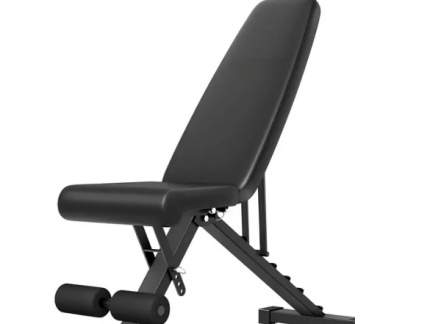
An adjustable dumbbell bench significantly expands training possibilities. Changing bench angles alters muscle recruitment patterns, ensuring that no single area becomes over-adapted.
Different bench positions target different chest regions:
Flat position: builds overall chest mass and strength
Incline position: emphasizes the upper chest and shoulder stability
Decline position: engages the lower chest and improves pressing mechanics
This variation prevents muscular plateaus and keeps workouts metabolically demanding. From a fat-loss perspective, constant adaptation forces the body to expend more energy and respond more effectively to training stimuli.
So, what exercise burns the most chest fat? The answer isn’t a single movement—it’s effective chest-focused strength training performed consistently on a Dumbbell Bench. By combining compound dumbbell exercises with proper bench support, users maximize muscle activation, calorie expenditure, and long-term fat reduction.
At ZY Fitness, we understand how important stable, durable, and ergonomic dumbbell benches are for achieving real training results. Our dumbbell benches are designed to support professional-level workouts while remaining accessible for a wide range of fitness environments.
If you’re looking to enhance your training setup or upgrade your fitness equipment lineup, we invite you to learn more at www.zy-fitness.com. Our team is always ready to help you find reliable solutions that support effective strength training and long-term performance.
1. Can chest fat be burned with only dumbbell bench exercises?
Dumbbell bench exercises significantly help, but best results come from combining them with overall fat-loss strategies such as cardio and nutrition control.
2. Is a dumbbell bench better than floor exercises for chest fat loss?
Yes. A dumbbell bench allows greater range of motion and muscle activation, leading to higher calorie burn and better chest development.
3. How often should I train chest on a dumbbell bench?
Training chest 2–3 times per week with adequate recovery is ideal for muscle growth and fat reduction.
4. Are dumbbell benches suitable for beginners?
Absolutely. Adjustable dumbbell benches allow beginners to start safely and progress gradually as strength improves.


