
English
Views: 0 Author: Site Editor Publish Time: 2026-02-10 Origin: Site


Losing belly fat is one of the most common fitness goals, yet also one of the most misunderstood. Many people head straight to the bench press, believing that building chest muscles will somehow burn fat around the stomach. While strength training is an essential part of fat loss, the reality is more nuanced.
In this article, we take a practical and science-based look at whether bench press exercises can help reduce belly fat—and how using a dumbbell bench can significantly improve your results. Drawing from real training principles and long-term fitness experience, we explain how fat loss actually works, how bench-based workouts fit into the picture, and why a dumbbell bench is a smarter foundation for effective, sustainable body transformation.
If your goal is not just strength, but visible fat loss and better body composition, understanding how to train—and what equipment to use—makes all the difference.
Before answering whether bench press can reduce belly fat, it’s important to understand what belly fat actually is.
Belly fat consists primarily of two types:
Subcutaneous fat, which sits just beneath the skin
Visceral fat, which surrounds internal organs and is more metabolically active
The body does not burn fat locally. This means you cannot spot-reduce fat by training one specific muscle group. Doing chest exercises will strengthen the chest, shoulders, and arms—but fat loss occurs systemically, not locally.
Belly fat reduction depends on:
Sustained calorie deficit
Increased total energy expenditure
Improved muscle mass and metabolism
Consistent training volume and intensity
Strength training—especially when done correctly—plays a major role in all of these factors.
The short answer is no—bench press alone will not directly burn belly fat. Belly fat loss cannot be achieved through spot reduction. However, bench press can play a supportive role in fat loss when it is used as part of a well-structured, full-body training system that increases overall energy expenditure and muscle mass.
The bench press is a classic compound movement that primarily targets the upper body. Its main muscle groups include:
Chest (pectorals)
Triceps
Front deltoids
When performed consistently, bench press training can:
Build upper-body strength
Increase lean muscle mass
Raise metabolic demand during workouts
Increased muscle mass is beneficial because it elevates resting metabolism, meaning the body burns more calories even outside of training sessions. From this perspective, bench press indirectly supports fat loss over time.
However, it is important to recognize the limitations of traditional barbell bench press, especially when fat loss—rather than pure strength—is the goal.
While effective for strength development, a standard barbell bench press tends to:
Engage fewer stabilizer muscles due to fixed movement paths
Burn fewer calories compared to multi-directional or full-body exercises
Encourage repetitive, fixed movement patterns that limit overall muscle recruitment
Because the barbell moves along a single plane, the body relies less on balance, coordination, and core engagement. As a result, the total metabolic demand of the exercise is relatively lower compared to more dynamic free-weight movements.
This is where a dumbbell bench becomes a more effective and versatile tool for fat-loss-oriented training.
A dumbbell bench dramatically expands what you can do compared to a flat barbell bench. It supports a wider range of movements, greater muscle activation, and higher overall energy expenditure—all of which are critical for reducing body fat, including stubborn belly fat.
Dumbbell exercises require each side of the body to work independently rather than relying on a fixed bar path. This unilateral demand:
Activates stabilizer muscles throughout the shoulders, core, and hips
Improves neuromuscular coordination and balance
Increases total muscle recruitment per repetition
Because more muscles are involved in each movement, the body expends more energy. Over time, this higher calorie burn contributes to a greater overall fat-loss effect.
In practical terms, more muscles working equals more calories burned, both during and after training sessions.
A major advantage of a dumbbell bench is versatility. It is not limited to one movement or muscle group. With a single bench setup, you can perform:
Flat, incline, and decline dumbbell presses
Dumbbell flyes for chest isolation
Bulgarian split squats and step-ups for lower-body activation
Core-focused movements such as bench leg raises or seated twists
This variety allows you to build full-body workouts instead of isolated chest sessions. Full-body training consistently outperforms single-muscle training when the goal is fat loss, because it increases heart rate, training density, and overall caloric demand.
By using a dumbbell bench as the foundation of your workouts, bench press becomes just one component of a broader, more effective fat-loss system—rather than a standalone exercise with limited impact on belly fat.
Many people believe cardio is the only way to lose belly fat. In reality, combining strength training with metabolic demand is far more effective.
Factor | Dumbbell Bench Training | Traditional Cardio |
Muscle building | High | Low |
Calorie burn (during) | Moderate to High | High |
Calorie burn (after) | High (afterburn effect) | Low |
Metabolism boost | Long-term | Short-term |
Body shaping | Excellent | Limited |
Using a dumbbell bench allows you to train in a way that burns calories during and after workouts, thanks to increased muscle mass and metabolic demand.
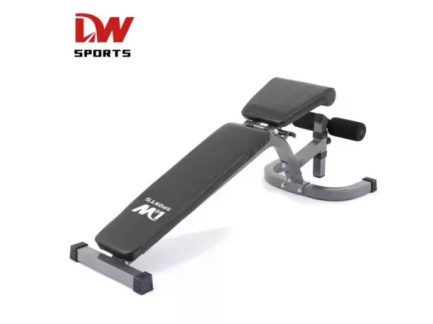
Exercises performed on a dumbbell bench often involve:
Multiple joints
Multiple muscle groups
Greater balance and control
Examples include:
Dumbbell bench press with controlled tempo
Single-arm presses
Bench-supported rows
Dumbbell thrusters using the bench
These movements elevate heart rate and energy use more than machine-based exercises.
Improved muscle mass helps the body:
Use glucose more efficiently
Store fewer calories as fat
Reduce visceral fat over time
This is especially important for stubborn belly fat.
A dumbbell bench allows you to structure workouts that blend strength and conditioning.
Exercise | Sets | Reps |
Dumbbell Bench Press | 4 | 10–12 |
Incline Dumbbell Press | 3 | 12 |
Bench Step-Ups (with dumbbells) | 3 | 12 each leg |
Dumbbell Flyes | 3 | 12–15 |
Bench Leg Raises | 3 | 15 |
Dumbbell Rows (bench-supported) | 3 | 12 |
This type of workout:
Trains upper and lower body
Engages the core
Maintains elevated heart rate
Maximizes calorie burn
No exercise—not even bench press—can overcome inconsistency.
A dumbbell bench helps because it:
Encourages regular training
Supports progressive overload
Fits both home and commercial gym settings
Adapts to beginners and advanced users
Consistency leads to:
Increased muscle mass
Higher resting metabolism
Gradual and sustainable fat loss
Even the best dumbbell bench workout cannot compensate for poor nutrition.
For belly fat loss:
Maintain a moderate calorie deficit
Prioritize protein intake
Balance carbohydrates and healthy fats
Stay hydrated
Strength training on a dumbbell bench works best when paired with proper nutrition.
From our experience working with fitness facilities and individual users, a dumbbell bench is one of the most practical tools for fat-loss-oriented training.
It offers:
Flexibility for full-body workouts
Scalability for different fitness levels
Long-term value compared to single-use machines
Space efficiency for home gyms
Whether your goal is losing belly fat, building strength, or improving overall fitness, a dumbbell bench supports all of these objectives in one compact setup.
Bench press alone will not magically remove belly fat—but bench-based training using a dumbbell bench can absolutely support belly fat loss when combined with proper programming, consistency, and nutrition.
A dumbbell bench transforms chest-only training into a versatile, high-impact fitness system. It allows you to train smarter, move more, and burn more calories—without overcomplicating your routine.
If you’re looking to build a training setup that supports real fat loss and long-term results, we encourage you to explore high-quality dumbbell bench solutions. To learn more about professional-grade options suitable for home and commercial use, visit www.zy-fitness.com for detailed information and support.
1. Can a dumbbell bench help me lose belly fat faster than machines?
A dumbbell bench allows for compound, free-weight movements that activate more muscles than machines, increasing calorie burn and metabolic impact.
2. How often should I train on a dumbbell bench to lose belly fat?
Most people see results training 3–5 times per week, combining strength and conditioning exercises.
3. Is a dumbbell bench suitable for beginners trying to lose fat?
Yes. A dumbbell bench supports adjustable loads and simple movements, making it ideal for beginners.
4. Do I need heavy weights on a dumbbell bench to lose belly fat?
Not necessarily. Moderate weights with proper volume, tempo, and consistency are highly effective for fat loss.


